Survival Sandbox: Playground
- 3.4
- Rating
- 1.00M
- Installs
- Free
- Price

 Analysis by App-foxy
Survival Sandbox: Playground is a free simulation game built around a simple but demanding idea: staying alive through dangerous nights in a monster-filled playground where chaos is part of the experience. I approached it expecting a light sandbox diversion, but its appeal is more specific than that. It is aimed at players who enjoy testing reactions, making quick decisions, and learning how an unpredictable environment behaves rather than following a carefully guided story.
The game comes from Ghaddan Studios and has already passed one million installs, which suggests that its basic survival-sandbox concept has found a sizeable audience. Its average score sits at 3.4 from roughly 730 ratings, so the reception is mixed rather than universally enthusiastic. That is useful context: this is not a polished recommendation for everyone, but it can be a worthwhile free download if you understand that the main attraction is experimentation under pressure.
How the playground survival loop feels in practice
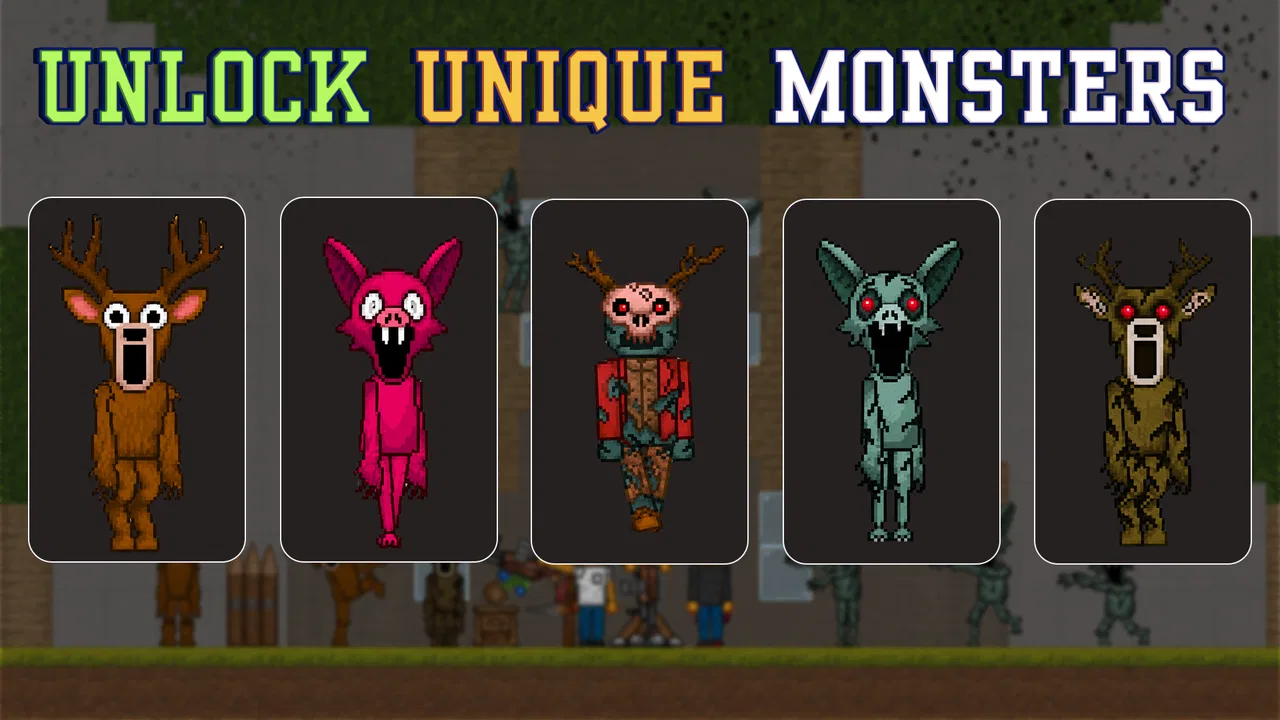
The central rhythm is easy to understand. You enter a hostile playground, deal with monsters and disorder, and try to make it through the night. The setting gives the game a different flavor from a conventional survival simulator. Instead of presenting a broad wilderness or a realistic settlement, it places danger in a familiar-looking space and turns that familiarity into tension.
You May Also Like

 Blood Strike: 2.5 Anniversary
Blood Strike’s Loadouts Turn Every Drop Into a Tactical Gamble
A close look at Blood Strike’s custom loadouts: how fast access to signature weapons reshapes its battle royale rhythm, rewards preparation, and narrows the gap between fights.

 Pandora - Music & Podcasts
Pandora’s Music Is Easy to Start, but Harder to Recover
Pandora’s strength is its low-effort path from a seed to a station. Its weak spot is how much confidence it asks you to place in connection, setup, and quiet recovery.

 8 Ball Pool
 Is Built on Rivalries, Rematches, and Routine
A close look at the rivalries, rematches, shared routines, and unanswered safety questions that turn a quick pool match into a persistent mobile community.

 Samsung Music
’s Quiet Strength Is Playing What You Already Own
Its reach comes less from spectacle than from dependable access to a personal library. That simplicity is both the app’s strongest retention engine and its ceiling.

 AccuWeather: Weather Radar
AccuWeather Review: A Quick, Clear Forecast for Everyday Decisions
For everyday plans, the best forecast is the one you can understand quickly. AccuWeather makes rain timing, radar, and local conditions easy to act on, with a few trade-offs.

 Hill Climb Racing
Why Hill Climb Racing Still Turns Crashes Into One More Run
A tiny car, a bumpy hill and one more upgrade: Hill Climb Racing keeps resurfacing because its simple chaos makes every near-miss feel personal.
More From Our News Desk



I like that contrast because a playground normally suggests safety, routine, and simple fun. Here, the same kind of environment becomes a place where every movement can feel suspicious. That change in mood gives the game its identity, even before considering the individual survival challenges. It is less about admiring scenery and more about reading the space, anticipating trouble, and deciding when to act.
The “sandbox” part matters as much as the survival part. A tightly scripted horror game tells me where to go and when to be afraid. This kind of game is more interesting when I can create my own small stories: a cautious attempt that lasts longer than expected, a risky move that backfires, or a night where I learn that an apparently safe route is not reliable. Those personal experiments are where the replay value comes from.
That also means the game may not satisfy someone looking for a deep campaign with a strong narrative arc. The store summary emphasizes mastering nights inside a deadly monster playground, so the focus is clearly on survival situations rather than character development or a long-form plot. I would choose it for short, repeatable challenges, not for an emotional adventure.
Why the night setting changes the way I play
Night survival creates a useful decision-making problem. When visibility or confidence is reduced, rushing forward becomes tempting but dangerous. I found the most sensible approach was to treat each attempt as reconnaissance first and a victory attempt second. Learning the shape of the playground, identifying places that feel exposed, and noticing how threats interrupt a route can be more valuable than trying to finish immediately.
One practical tip is to avoid changing several habits at once. If an attempt fails, I would alter one choice—such as moving earlier, taking a different path, or spending more time observing—rather than completely improvising a new strategy. That makes the game’s trial-and-error structure more useful. You can tell whether a decision helped instead of blaming the entire environment for a bad result.
A second useful habit is to play in short sessions when your attention is limited. Survival games often become frustrating when I continue immediately after a careless mistake. A brief pause helps separate a genuine difficulty from a rushed decision. This is especially relevant here because the chaos is part of the appeal, but chaos can also make repeated failures feel less informative if I am not paying attention to what actually caused them.
The game can work well as a quick evening distraction. Imagine having ten or fifteen minutes before leaving home or while waiting for a friend. Rather than beginning a long campaign, you can use that time for a few survival attempts, testing one approach and stopping before the experience becomes repetitive. That is a more realistic use case than expecting it to replace a large console-style survival game.
What the free price means for its value
The most important purchasing fact is straightforward: the game is free. That removes the initial financial barrier and makes experimentation easy. I can install it, see whether the playground survival loop suits me, and leave without having paid for access. For a game with a mixed average rating, that matters because the cost of discovering that it is not my style is limited to time and device storage.
Free access does not automatically make every weakness irrelevant. My time still has value, and a game can be disappointing even when it costs nothing. The right question is whether the core loop gives you enough interesting decisions to justify returning. If you enjoy unpredictable survival challenges, the answer may be yes. If you need a substantial story, detailed progression, or a highly refined simulation, free access alone will not solve that mismatch.
I would also avoid treating the download count as proof that the game will suit you personally. More than one million installs show reach, not quality for every type of player. The 3.4 average points in the same direction: plenty of people have tried it, but the experience clearly has limitations that some players notice. I see the price as an invitation to test it, not as a reason to overlook friction.
The age rating is Everyone, which makes the game easier to consider for a broad household audience from a rating perspective. Still, the premise involves monsters and nighttime survival, so parents should decide whether that atmosphere fits a particular child’s comfort level. The rating communicates the formal age category; it does not guarantee that every player will enjoy the tension or chaotic encounters.
Where the game earns its place among survival alternatives
Compared with a traditional life simulator, Survival Sandbox: Playground is much more focused on immediate danger. A life simulator usually rewards planning over longer periods, routine management, and gradual improvement. Here, the interesting question is closer to “Can I handle this night?” That makes it a better choice for players who want urgency rather than a calm schedule of tasks.
Compared with a large open-world survival game, it is also easier to approach. You are not necessarily committing to a broad crafting project or a lengthy resource-management routine. The playground setting gives the experience a compact identity. The trade-off is depth: a smaller, more concentrated concept may become repetitive sooner than a huge world filled with systems and long-term goals.
It also differs from a linear horror game. Linear horror depends heavily on directed pacing, scripted reveals, and a carefully controlled sequence of events. This game’s sandbox framing suggests that the player’s choices and the disorder of the environment are more important than a fixed cinematic route. If you enjoy replaying a situation to see whether a different decision changes the outcome, that is a meaningful advantage.
On the other hand, players who prefer predictable rules may find the same quality irritating. A sandbox can feel exciting when its systems produce surprising situations, but it can feel unfair when the outcome is difficult to understand. My advice is to give the game several focused attempts before judging it, while still recognizing that not every confusing result becomes satisfying with more practice.
Small strategies that make experimentation more useful
My first recommendation is to separate observation from commitment. On an early attempt, resist the urge to treat every visible opening as an invitation. Watch how the environment behaves, note where danger seems to concentrate, and learn which choices create unnecessary exposure. This turns failure into information instead of simply repeating the same panic response.
My second recommendation is to use a “one-variable” approach. Change one route or one timing decision per attempt. In a chaotic sandbox, this is a surprisingly effective way to build a mental map. If you change everything, you may survive by luck but learn very little. If you change one thing, even a failed run can reveal whether that choice was sensible.
My third recommendation is to judge the game by tension rather than by the amount of content you expect from a major survival title. Its strength is the compact scenario: a familiar playground, a dangerous night, and monsters that turn movement into a problem. Expecting a huge inventory system, a detailed narrative, or a long progression structure would make the experience seem smaller than it is. Measuring it as a focused survival sandbox is fairer.
There is also a useful social angle, even if you play alone. The game’s unusual setting makes it easy to describe a failed attempt to someone else: you can compare routes, discuss what seemed dangerous, and challenge a friend to survive longer without needing a formal multiplayer feature. I would not present that as a built-in mode; it is simply the kind of conversation a compact, unpredictable game can create.
Technical fit and practical expectations
The current version is 2.3, and the listed minimum operating system is Android 7.0. That gives the game a relatively broad compatibility window for Android users with older supported devices. I would still keep expectations realistic: operating-system compatibility does not tell me how smoothly every phone will run the game, so performance may depend on the particular hardware and background load.
Because it is free, the sensible installation workflow is low-risk. Download it when you have enough time for more than one attempt, then decide based on the controls, pacing, and how understandable the survival feedback feels. A single rushed session is not enough to evaluate a game built around learning an environment. Conversely, if the basic movement and threat-reading loop already feels unpleasant, there is no financial reason to force yourself to continue.
Ghaddan Studios has kept the concept direct: a survival sandbox rather than a genre blend overloaded with unrelated systems. That clarity is a strength when you want to know what kind of session you are starting. It is a weakness if you want a game that constantly introduces new mechanics or a broader set of activities. I would keep the app installed for occasional sessions, not necessarily as my only simulation game.
Who should install it, and who should pass
I think it is a good fit for players who like short survival tests, eerie environments, and trial-and-error learning. It is particularly suitable if you enjoy discovering safer habits through repeated attempts instead of receiving a long tutorial that explains everything in advance. The free price makes it easy to explore, and the Everyone rating broadens its potential audience, subject to personal comfort with monster-themed tension.
It may also suit someone who wants a break from realistic simulation games. The playground setting is deliberately strange, and that strangeness gives the game a memorable hook. If you are tired of managing farms, cities, or ordinary daily routines, this offers a more immediate and unsettling kind of simulation: the environment itself becomes the problem.
I would skip it if your priority is a rich story, extensive character progression, or a deeply realistic survival model. I would also be cautious if you dislike unclear outcomes or repeated attempts. The mixed average rating suggests that the concept does not land equally well for everyone, and the game’s free status should not be confused with a promise of premium-level depth.
For families, the formal Everyone classification makes the game easier to consider, but I would still preview the atmosphere before recommending it to a younger player. A child who enjoys playful monster themes may find the contrast entertaining, while another may find nighttime survival uncomfortable. The best choice depends on temperament, not only the label.
My final recommendation
Survival Sandbox: Playground is worth trying because its free entry cost matches its experimental design. I enjoy the way it turns an ordinary playground into a compact survival problem, and I think the strongest moments come from learning how to approach each night rather than blindly rushing toward a win. The game has a clear personality, which many small simulation titles lack.
My reservation is equally clear: the mixed 3.4 average means you should not expect universal polish or a guaranteed long-term favorite. Its value depends on whether you enjoy repetition, uncertainty, and self-directed discovery. Players seeking a large, structured alternative will likely be better served by a more expansive survival or simulation game.
For me, the verdict is try it before you commit your time to anything larger. Since access is free, the experiment is reasonable. Give it several thoughtful attempts, use failures to test one change at a time, and decide whether the playground’s chaos feels exciting or merely frustrating. If the idea of mastering dangerous nights appeals to you, Ghaddan Studios has created a focused diversion with a distinctive setting. If you need a story-driven or highly detailed simulation, skip it without regret and choose a deeper alternative.
FAQs for Survival Sandbox: Playground
01What is Survival Sandbox: Playground?
Survival Sandbox: Playground is a physics-based sandbox game focused on experimentation, construction, and survival-style challenges. Players can create scenes, place objects and characters, test different tools, and observe how the environment reacts. It is designed for open-ended gameplay rather than a fixed story, so the experience depends largely on the scenarios you build and the interactions you discover.
02How do you play Survival Sandbox: Playground?
Gameplay generally begins by selecting a sandbox environment and adding available objects, characters, structures, or interactive elements. You can arrange the scene, use tools, and experiment with physics-based reactions. Some situations may require resource management or defensive planning, while others simply encourage creative testing. Because there is no single correct solution, patience and trial-and-error are important parts of the experience.
03Is Survival Sandbox: Playground free to download and play?
The game may be available to download for free, but the exact model can depend on the Android or iOS version and the developer’s current release. Free versions can include advertising, optional purchases, or locked content. Before installing, check the official store listing for pricing, in-app purchase details, supported devices, and any subscription information, as these conditions can change with updates.
04Does Survival Sandbox: Playground require an internet connection?
Many sandbox activities can often be enjoyed offline once the game has been installed, especially when you are creating scenes or experimenting with local objects. However, an internet connection may be needed for the initial download, advertisements, cloud features, updates, or purchases. Availability can vary by version, so it is best to test the game in airplane mode after installation if offline access is important to you.
05Is Survival Sandbox: Playground suitable for children?
Suitability depends on the child’s age, maturity, and sensitivity to survival-themed or physics-based scenarios. The game may include destruction, hazards, combat-like interactions, or characters being placed in dangerous situations, even when presented in a cartoon-style sandbox. Parents should review the store rating, privacy information, advertisements, and in-app purchases, and consider using device-level parental controls before allowing independent play.
Pros
- Open-ended sandbox encourages creative survival scenarios.
- Simple controls make experimenting with objects easy.
- Physics interactions create unpredictable and entertaining moments.
- Works well for short
- casual play sessions.
- Wide range of tools supports different gameplay approaches.
Cons
- Some scenarios may feel repetitive after extended play.
- Physics behavior can occasionally be inconsistent.
- The interface may take time to understand for new players.
- Progression may feel limited for players seeking clear goals.
- Performance can vary on older or less powerful devices.

Survival Sandbox: Playground
Gallery